
Regular exercise is one of the most powerful habits you can adopt for a healthier and happier life. The benefits of exercise for physical and mental health go far beyond weight management or muscle building. From improving heart health to boosting mood and reducing stress, physical activity plays a vital role in overall well-being. In today’s fast-paced lifestyle, incorporating exercise into your daily routine is not a luxury—it is a necessity.
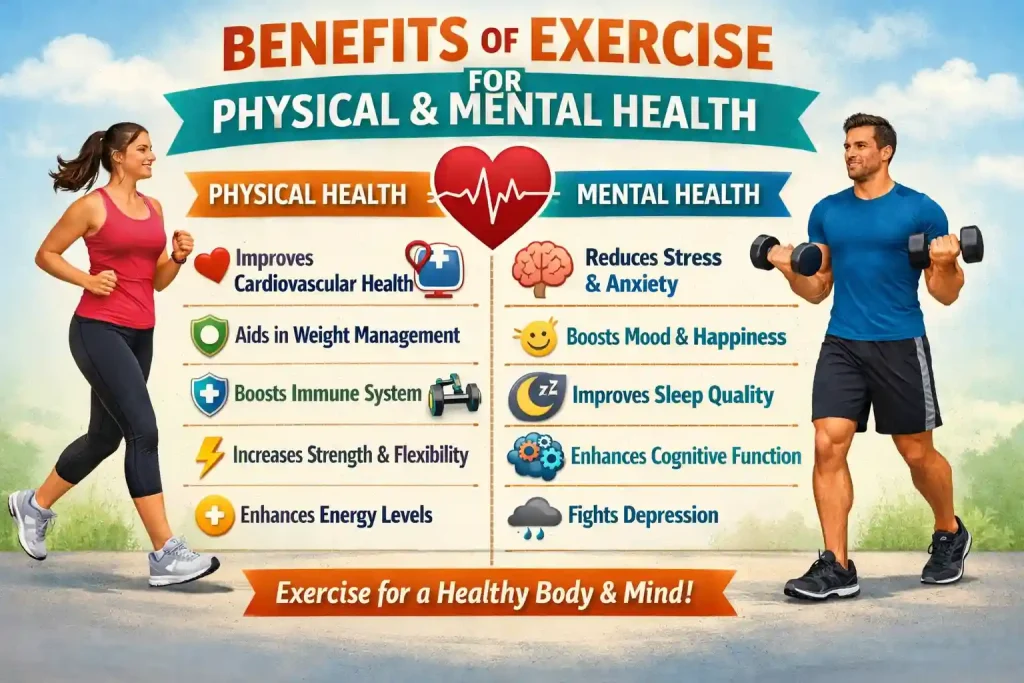
This blog explores the key benefits of exercise for physical and mental health and explains why staying active is essential for people of all ages.
Why Exercise Is Important for Overall Health
Exercise is any physical activity that gets your body moving and increases your heart rate. This includes walking, jogging, yoga, cycling, swimming, strength training, or even dancing. When practiced regularly, exercise supports almost every system in the body and significantly improves mental health.
The benefits of exercise for physical and mental health are supported by scientific research and medical professionals worldwide. Just 30 minutes of moderate activity a day can make a noticeable difference in your energy levels, mood, and long-term health.
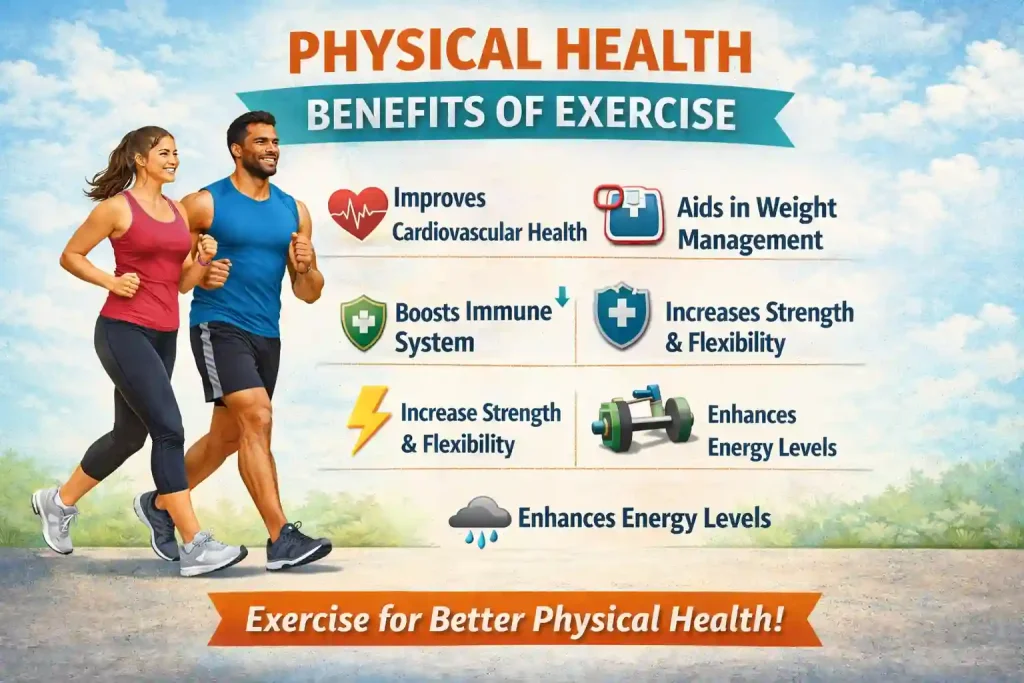
Physical Health Benefits of Exercise
1. Improves Heart and Cardiovascular Health
One of the most important benefits of exercise for physical health is a stronger heart. Regular physical activity improves blood circulation, lowers blood pressure, and reduces the risk of heart disease and stroke.
Exercise helps:
- Strengthen heart muscles
- Improve cholesterol levels
- Reduce the risk of hypertension
- Enhance oxygen delivery throughout the body
Aerobic exercises such as brisk walking, jogging, or cycling are especially beneficial for cardiovascular health.
2. Helps Maintain a Healthy Weight
Exercise plays a crucial role in weight management by burning calories and boosting metabolism. Combined with a balanced diet, regular physical activity helps prevent obesity and related conditions such as diabetes and joint problems.
The benefits of exercise for physical health include:
- Increased calorie burning
- Better fat loss
- Improved muscle tone
- Balanced body composition
Strength training also helps build lean muscle, which increases resting metabolic rate.
3. Strengthens Muscles and Bones
As we age, muscle mass and bone density naturally decrease. Regular exercise, especially strength training and weight-bearing activities, helps maintain strong muscles and bhttps://www.mayoclinic.org/healthy-lifestyle/fitness/in-depth/exercise/art-20048389ones.
Key benefits include:
- Reduced risk of osteoporosis
- Improved posture and balance
- Lower chance of injuries and falls
- Enhanced physical strength
Exercises like resistance training, yoga, and walking are excellent for bone and muscle health.
4. Boosts Immunity and Energy Levels
Moderate exercise strengthens the immune system by improving circulation and promoting better cell function. People who exercise regularly often experience fewer illnesses and recover faster.
Additionally, exercise improves energy levels by:
- Increasing oxygen flow
- Enhancing stamina
- Reducing fatigue
This is one of the lesser-known but powerful benefits of exercise for physical health.
Mental Health Benefits of Exercise
5. Reduces Stress and Anxiety
One of the most significant benefits of exercise for mental health is stress reduction. Physical activity lowers cortisol levels (the stress hormone) and promotes relaxation.
Exercise helps:
- Release physical tension
- Calm the nervous system
- Improve emotional balance
Activities like yoga, walking, and stretching are especially effective for reducing stress and anxiety.
6. Improves Mood and Fights Depression
Exercise stimulates the release of endorphins, often called “feel-good hormones.” These chemicals improve mood and create a sense of happiness and well-bhttps://www.sharmarekha.co.in/wp-admin/post.php?post=708&action=editeing.
The mental health benefits of exercise include:
- Reduced symptoms of depression
- Improved emotional stability
- Increased positivity
Regular physical activity is often recommended as a natural support method for managing mild to moderate depression.
7. Enhances Brain Function and Memory
Exercise has a powerful impact on brain health. It increases blood flow to the brain, which supports cognitive function, memory, and focus.
Benefits include:
- Improved concentration
- Better learning ability
- Reduced risk of cognitive decline
Studies show that regular exercise can lower the risk of conditions like Alzheimer’s disease and age-related memory loss.
8. Improves Sleep Quality
Poor sleep affects both physical and mental health. Regular exercise helps regulate sleep patterns and improves sleep quality.
The benefits of exercise for mental health and sleep include:
- Faster sleep onset
- Deeper sleep cycles
- Reduced insomnia symptoms
However, it’s best to avoid intense workouts right before bedtime.
Emotional and Social Benefits of Exercise
9. Builds Self-Confidence and Self-Esteem
Achieving fitness goals—no matter how small—boosts self-confidence. Exercise improves body image, discipline, and self-belief.
Over time, people who exercise regularly often experience:
- Higher self-esteem
- Better emotional control
- Increased motivation
These emotional benefits strongly support mental well-being.
10. Encourages Social Interaction
Group workouts, sports, or fitness classes provide opportunities for social connection. Social interaction is essential for mental health and emotional balance.
Exercise helps:
- Reduce feelings of loneliness
- Build supportive relationships
- Improve communication skills
This is especially beneficial for individuals experiencing stress or isolation.
How to Start Exercising Regularly
Starting an exercise routine doesn’t have to be complicated. Here are simple tips to make exercise a habit:
- Start with 20–30 minutes a day
- Choose activities you enjoy
- Set realistic fitness goals
- Stay consistent rather than intense
- Mix cardio, strength, and flexibility exercises
Even small steps can unlock the benefits of exercise for physical and mental health.
Conclusion
The benefits of exercise for physical and mental health are undeniable. From strengthening the heart and muscles to improving mood, reducing stress, and enhancing brain function, regular physical activity supports a balanced and healthy life.
You don’t need expensive equipment or a gym membership to start. Simple activities like walking, stretching, or yoga can make a big difference. By making exercise a daily habit, you invest in your long-term health, happiness, and quality of life.
Start today—your body and mind will thank you.