
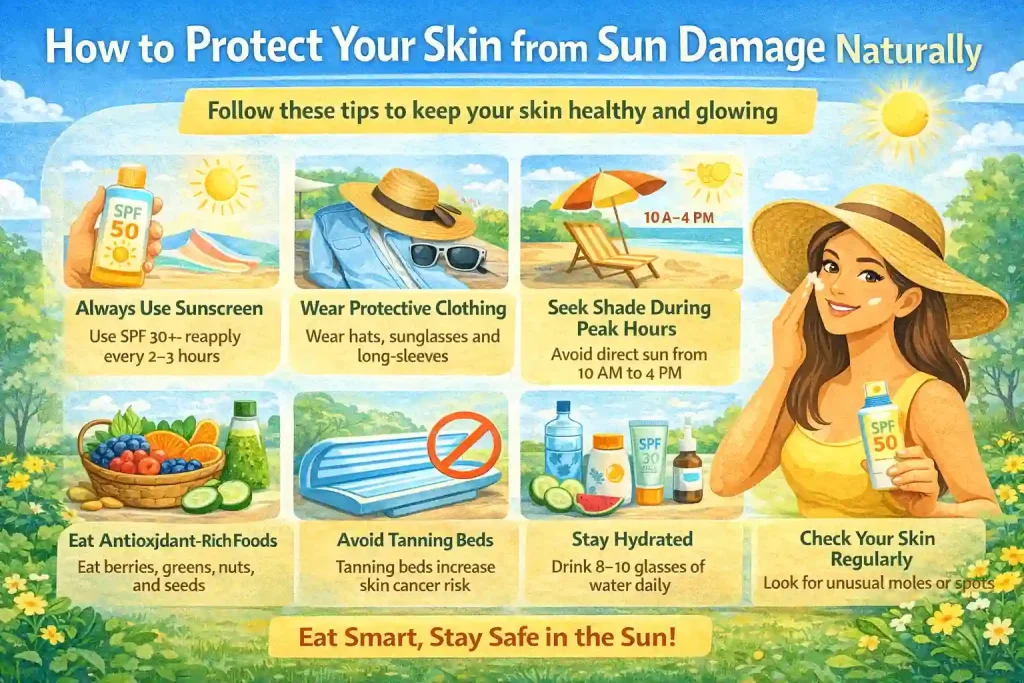
Excessive sun exposure can lead to serious skin problems, including premature aging, sunburn, dark spots, and even skin cancer. Knowing how to protect your skin from sun damage is essential for maintaining healthy, glowing skin. Sun protection is not just about summer—UV rays can harm your skin year-round.
In this blog, we’ll explore effective ways to protect your skin from the sun, including proper sunscreen use, lifestyle habits, natural remedies, and skincare tips.
Why Sun Protection Is Important
The sun emits ultraviolet (UV) rays, including UVA and UVB rays, which penetrate your skin and cause damage. UVA rays contribute to premature aging, while UVB rays cause sunburn. Long-term exposure without protection can increase the risk of skin cancer.
Key reasons to protect your skin:
- Prevent premature wrinkles and fine lines
- Reduce risk of skin cancer
- Avoid sunburns and redness
- Maintain an even skin tone
Understanding the importance of sun protection is the first step toward healthy skin.
1. Always Use Sunscreen
Sunscreen is the most crucial step in protecting your skin. Choose a broad-spectrum sunscreen with SPF 30 or higher.
Tips for Effective Sunscreen Use:
- Apply 20–30 minutes before going outdoors
- Reapply every 2–3 hours, especially after swimming or sweating
- Don’t forget areas like ears, neck, hands, and feet
- Use water-resistant formulas if needed
Sunscreen is your first defense against harmful UV rays.
2. Wear Protective Clothing
Clothing can act as a physical barrier against the sun. Long sleeves, wide-brimmed hats, and sunglasses help reduce exposure.
Recommended Protective Clothing:
- Light, breathable fabrics with UV protection
- Wide-brimmed hats to shield face and neck
- Sunglasses that block 100% UV rays
- Long pants or skirts for extended sun exposure
Clothing complements sunscreen and provides all-day protection.
3. Seek Shade During Peak Hours
UV rays are strongest between 10 AM and 4 PM. Avoid direct sun exposure during these hours when possible.
Tips:
- Stay under trees, umbrellas, or covered areas
- Plan outdoor activities for early morning or late afternoon
- Use reflective surfaces carefully, as they can increase UV exposure
Being mindful of the sun’s intensity helps reduce cumulative skin damage.
4. Incorporate Antioxidant-Rich Foods
A diet rich in antioxidants strengthens your skin’s ability to fight sun damage. Vitamins C, E, and beta-carotene help neutralize harmful free radicals caused by UV rays.
Foods That Help Protect Your Skin:
- Citrus fruits (oranges, lemons)
- Berries (blueberries, strawberries)
- Nuts and seeds
- Green leafy vegetables
- Carrots and sweet potatoes
Healthy eating supports your skin from the inside out.
5. Use Natural Sun Protection Remedies
In addition to sunscreen, certain natural ingredients can soothe and protect skin from sun exposure.
Effective Remedies:
- Aloe Vera Gel: Reduces redness and hydrates the skin
- Green Tea Extract: Contains polyphenols that protect against UV damage
- Coconut Oil: Offers mild sun protection and keeps skin moisturized
- Cucumber Slices: Soothes sunburned skin
These remedies are great for after-sun care and prevention.
6. Maintain a Skincare Routine for Sun Protection
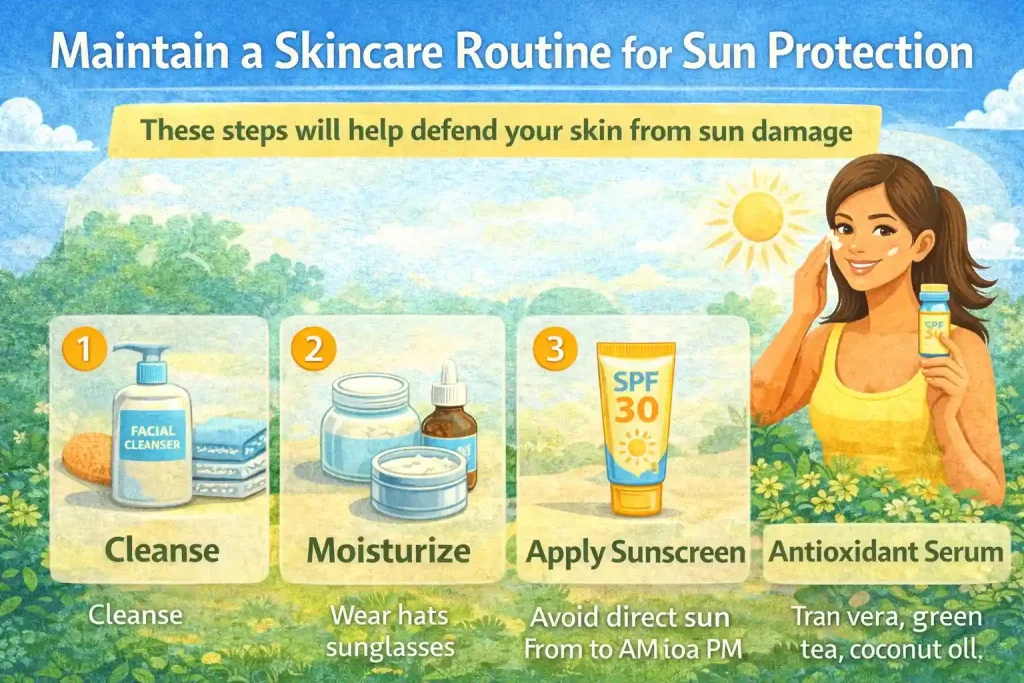
A proper skincare routine enhances your skin’s defense against sun damage.
Recommended Routine:
- Cleanse: Remove dirt and pollutants
- Moisturize: Keeps skin hydrated
- Apply Sunscreen: Every morning before going outside
- Antioxidant Serum: Protects against environmental stress
Consistent care improves your skin’s resilience over time.
7. Avoid Tanning Beds
Tanning beds emit concentrated UV rays that accelerate skin damage. They increase the risk of premature aging and skin cancer.
Alternatives:
- Self-tanning lotions or sprays
- Bronzing powders for temporary color
- Gradual natural sun exposure with protection
Avoiding tanning beds is a key strategy in protecting your skin long-term.
8. Stay Hydrated
Water keeps your skin hydrated and helps repair damage caused by the sun. Dehydrated skin is more vulnerable to sunburn and irritation.
Hydration Tips:
- Drink 8–10 glasses of water daily
- Include water-rich fruits like watermelon and cucumber
- Avoid excessive caffeine and alcohol, which dehydrate the skin
Hydration supports elasticity, glow, and recovery from sun exposure.
9. Monitor Your Skin for Changes
Regular skin checks help detect early signs of sun damage or skin cancer. Consult a dermatologist if you notice:
- Unusual moles or spots
- Persistent redness or irritation
- Rough or scaly patches
Early detection ensures effective treatment and long-term skin health.
Conclusion
Knowing how to protect your skin from sun damage is essential for healthy, youthful, and glowing skin. Daily sunscreen use, protective clothing, shade, antioxidants, hydration, and proper skincare routines work together to minimize UV damage. Avoid tanning beds and monitor your skin for any unusual changes.
By adopting these habits, you can enjoy the sun safely while keeping your skin healthy and radiant for years to come.