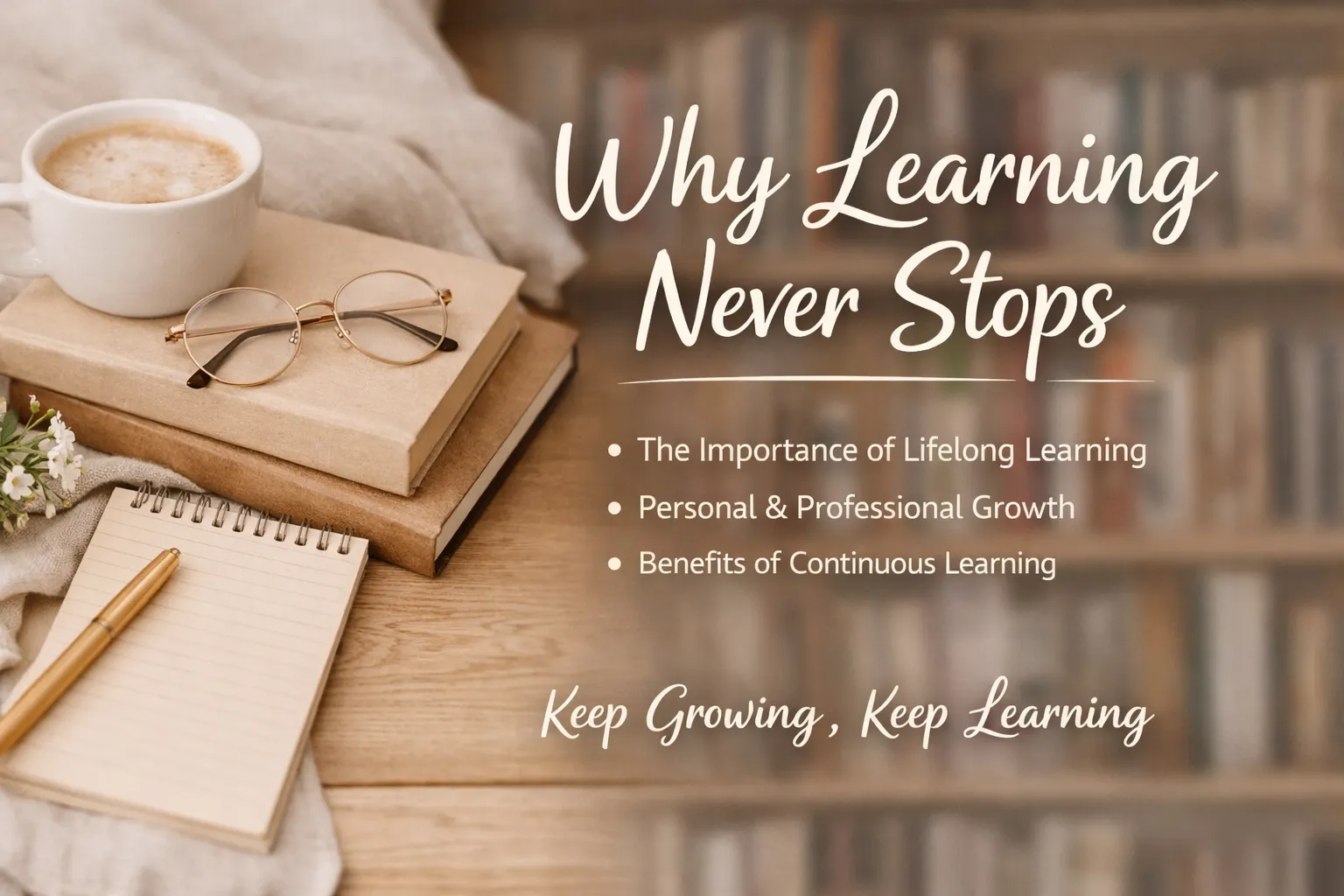
Learning is not limited to classrooms, degrees, or a specific age. In today’s fast-changing world, learning has become a lifelong process that continues from childhood to old age. The idea that education ends after school or college is outdated. Instead, continuous learning is essential for personal development, career growth, and mental well-being. This is why learning never stops.
In this blog, we will explore the importance of lifelong learning, how it helps us adapt to change, and why learning is crucial for success and happiness in modern life.https://jordan-engads.medium.com/never-stop-learning-because-life-never-stops-teaching-b443924266dc
What Does Lifelong Learning Mean?
Lifelong learning refers to the ongoing, voluntary, and self-motivated pursuit of knowledge. It includes formal education, online courses, professional training, reading books, learning new skills, and even gaining experience from daily life. Learning can happen anywhere—at work, at home, through hobbies, or by interacting with others.
The concept of lifelong learning emphasizes that education is a continuous journey, not a one-time event. As the world evolves, so must our skills, knowledge, and mindset.
Why Learning Never Stops in a Changing World
The world is constantly changing due to technology, globalization, and innovation. New tools, industries, and career opportunities emerge regularly, while some traditional jobs become obsolete. In such an environment, continuous learning is essential to stay relevant.
Learning never stops because:
- Technology evolves rapidly
- Job requirements change frequently
- New skills are always in demand
- Information updates constantly
By learning continuously, we can adapt to these changes instead of being left behind.
The Importance of Continuous Learning for Career Growth
One of the strongest reasons why learning never stops is career advancement. Employers value individuals who are willing to learn, adapt, and improve themselves. Continuous learning helps you:
- Upgrade professional skills
- Improve problem-solving abilities
- Increase job opportunities
- Gain confidence in your work
- Stay competitive in the job market
Whether you are a student, employee, freelancer, or entrepreneur, learning new skills such as communication, digital literacy, leadership, or technical expertise can open doors to better career opportunities.https://www.sharmarekha.co.in/wp-admin/post.php?post=708&action=edit
Learning Never Stops Because Knowledge Is Never Complete
No matter how educated or experienced a person is, there is always something new to learn. Knowledge is vast and constantly expanding. New research, discoveries, and ideas are introduced every day.
Learning never stops because:
- No one can know everything
- Every experience teaches a lesson
- Curiosity drives growth
- Each stage of life brings new challenges
When we accept that learning is endless, we become more open-minded and humble, which helps us grow intellectually and emotionally.
Personal Growth and Self-Improvement Through Learning
Learning is not only about career success; it also plays a vital role in personal development. When you learn something new, you improve your thinking, decision-making, and emotional intelligence.
Continuous learning helps you:
- Build self-confidence
- Improve communication skills
- Develop critical thinking
- Become more creative
- Gain new perspectives on life
Learning a new language, reading self-improvement books, practicing mindfulness, or developing a hobby can significantly improve your quality of life.
Why Learning Never Stops at Any Age
Many people believe that learning is only for the young, but this is a misconception. Learning never stops, regardless of age. In fact, learning at an older age helps keep the brain active and sharp.
Studies show that lifelong learning:
- Improves memory and focus
- Reduces the risk of cognitive decline
- Boosts mental health
- Encourages social interaction
Whether you are in your 20s, 40s, or 60s, learning new skills or gaining new knowledge keeps your mind engaged and your life meaningful.
Learning Never Stops in the Digital Age
The digital age has made learning more accessible than ever. Online courses, webinars, podcasts, blogs, and tutorials allow people to learn anytime and anywhere. You no longer need to attend a physical classroom to gain valuable knowledge.
Digital learning platforms support lifelong learning by:
- Offering flexible learning options
- Providing affordable or free resources
- Allowing self-paced learning
- Covering a wide range of topics
This easy access to information reinforces the idea that learning never stops.
The Role of Curiosity in Lifelong Learning
Curiosity is the foundation of learning. When you ask questions and seek answers, you naturally continue learning. Curious people are more innovative, adaptable, and open to change.
Learning never stops when you:
- Ask questions
- Explore new ideas
- Try new experiences
- Learn from failures
By nurturing curiosity, you can make learning an enjoyable and lifelong habit rather than a burden.
Challenges in Continuous Learning and How to Overcome Them
Despite its importance, many people struggle to continue learning due to lack of time, motivation, or confidence. However, these challenges can be overcome with the right approach.
Tips to keep learning:
- Set small, achievable goals
- Learn something new every day
- Use online resources
- Stay consistent, not perfect
- Apply what you learn in real life
Remember, learning never stops when you make it part of your daily routine.
Why Learning Never Stops: Final Thoughts
Learning never stops because life itself is a continuous learning experience. Every success, failure, interaction, and challenge teaches us something valuable. In a world that is constantly evolving, lifelong learning is no longer optional—it is essential.
By embracing continuous learning, you can stay relevant, grow personally and professionally, and live a more confident and fulfilling life. No matter where you are in your journey, remember that learning never stops—and that is what makes life meaningful.